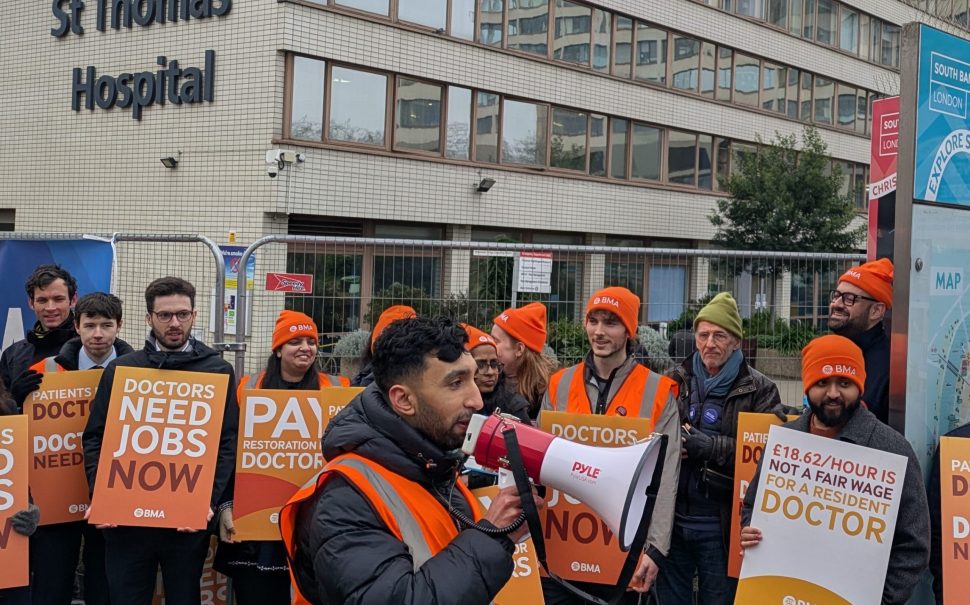
Thousands of resident doctors began a five-day strike on 17 December after rejecting the government’s latest offer in a long-running dispute over pay and working conditions.
Resident doctor members of the British Medical Association (BMA) voted 83% in favour of the industrial action, which began at 7am on 17 December and ends at 7am on 22 December.
The BMA argues that despite receiving a 29% pay rise over the past three years, resident doctors have experienced a 21 per cent pay cut since 2008 when accounting for inflation.
Second-year resident doctor Juliet Thornton said: “A first-year resident doctor is paid £18.62 an hour.
“The kind of things I was doing during my first year included looking after 400 patients overnight with one other resident doctor, attending cardiac arrest calls and delivering life-saving medications.
“I don’t think that’s fair pay for that kind of work.”
However, the government disagrees with the 21 per cent figure, saying it relies on an outdated measure of inflation, and independent analysis by Full Fact, using a measure recommended by a member of the Royal Statistical Society, suggests the real-terms cut is closer to 7%.
The dispute is also driven by a growing jobs crisis: this year, 40,000 doctors applied for just 10,000 specialty training posts, leaving many unable to progress their careers.
The recent government offer contained a pledge to create 4,000 new training places, but doctors say this would only recycle existing posts rather than create new ones.
Health Secretary Wes Streeting described the Christmas strikes as ‘self-indulgent, irresponsible and dangerous’, saying the BMA rejected the government’s offer to extend the strike mandate and postpone action until January.
Featured Image credit: Tom Leslie

Join the discussion