While London rents have decreased slightly overall, some of the capital’s sharpest increases are now concentrated in more traditionally affordable areas, new data reveals.
According to index data from flatshare site SpareRoom, average room rents across London recorded marginal year-on-year declines through 2025, but still cost close to £1,000 (£985) per month.
As a result, growing numbers of Londoners are looking away from expensive inner city neighbourhoods and towards cheaper parts of the capital, which is now leading to rent rises in outer London.
Matt Hutchinson, director at flatshare site SpareRoom, said: “The pressure of demand on suburbia will force up rents there too, until there’s nowhere left to go.”
One of the clearest examples of this can be seen in South East London: despite remaining marginally below the London average for rents (£958 per month), the area has received the fastest annual increase of any London region in Q4 2025 at 1.2%.
Hutchinson added: “Long-term unaffordable rents don’t just push people into debt and poverty, they can also change society and the economy too.
“If the capital can’t support its frontline and essential workers, or younger people starting out in their careers, the whole profile of the city changes.
“Only a meaningful decrease in average rents will improve the situation, and that hinges on a supply injection.”
At a postcode level, some of the largest annual rent increases were recorded in outer London districts rather than traditional prime rental hotspots: Barnes (SW13) and Mill Hill (NW7) saw year-on-year rises of 14% and 13% respectively.
Meanwhile, several lower cost postcodes in south-east and east London also experienced notable increases from comparatively low starting points.
At the same time, genuinely affordable options within the capital are becoming increasingly scarce, as only 6 of London postcode districts now have average room rents below £800 per month.
Those that do are concentrated mainly in parts of east and north London, including areas such as Manor Park, East Ham and Edmonton.
| Postcode | Average monthly room rent Q4 2025 |
| E12 (Manor Park) | £741 |
| E6 (East Ham) | £755 |
| N9 (Lower Edmonton) | £760 |
| E4 (Chingford) | £768 |
| E7 (Forest Gate) | £781 |
| N18 (Upper Edmonton) | £791 |
| E13 (Plaistow) | £801 |
| SE9 (Eltham) | £807 |
| SE2 (Abbey Wood) | £814 |
| N13 (Palmers Green) | £824 |
This outward spread of rent increases is not only confined to London’s borders, as commuter towns are also seeing rising competition as renters are forced to search further afield.
In Esher, Surrey – which is approximately 30 minutes from Waterloo by train – demand for rooms rose by more than 30% over the past year, with more than 11 people now searching for every available room.
Molly, who wished for her surname not to be included, rents in Catford, and said: “When I first moved to London for university, I had a loan which meant I could rent places much closer to central.
“But since I started full time work – on a normal salary – I’ve had to move further and further away every year just to be able to afford somewhere to live, and most of the time I’m renting just a room and sharing with strangers.”
London rents surged sharply in the wake of the pandemic, with prices for rooms in shared accommodations rising by more than a third since 2025.
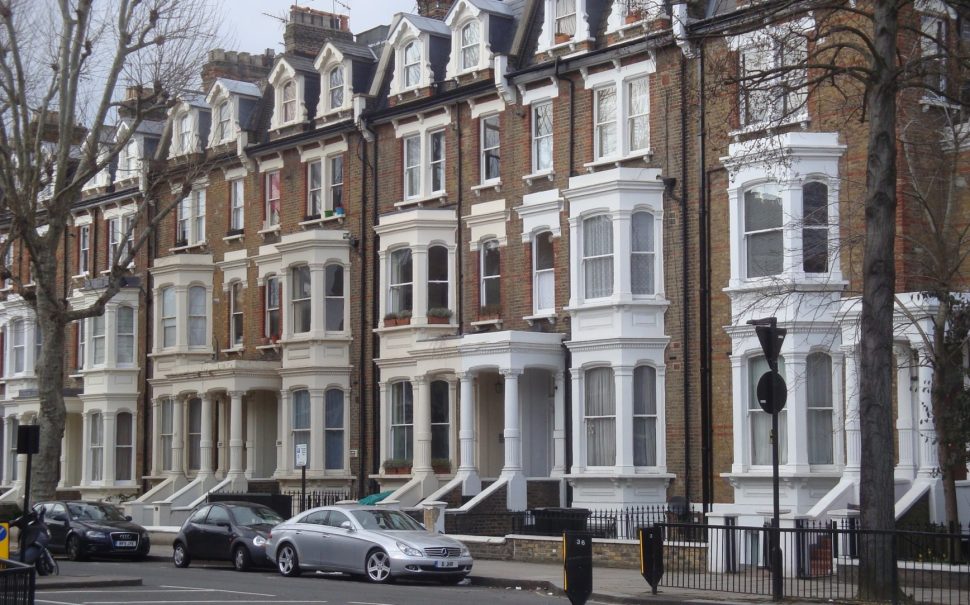
Featured image credit: London houses (Source: Flickr, Julie Kertesz, CC BY-NC-ND 2.0)



Join the discussion