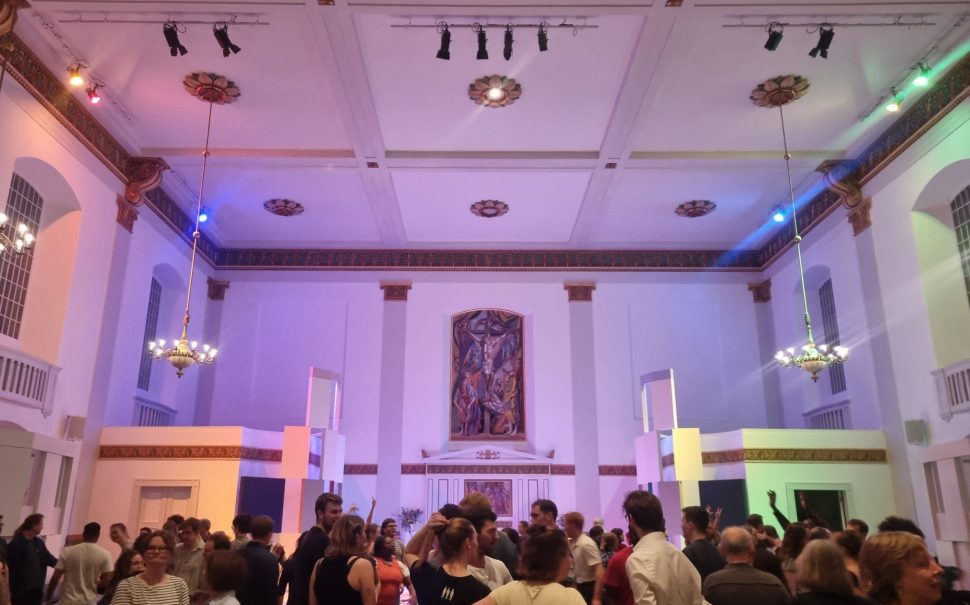
Ceilidh comes from the Gaelic term meaning ‘gathering’ and ‘visit’, with its folklore roots encouraging togetherness through storytelling, performing, and most commonly today – dancing.
Outside Waterloo Station in St Johns Church, a ceilidh event spurred people to unite in dance once again for its Burns Night event, celebrating Scottish cultural heritage in the heart of London.
Marking the one year anniversary of the Waterloo Ceilidhs, the three-hour event focussed on Scottish music and dance dedicated to Scots poet Robert Burns a week after 25 January.
Martin Clarke, the founder of the Waterloo Ceilidh, and the caller of the event has been a fiddle player since 2006.
He said that compared to private events like weddings and birthdays, a public series offered something different.
“I really enjoy doing public ceilidhs that people choose to come to,” he said. “You’ve got 200 people in the room, having a great time dancing around and listening to fabulous music together.”
Ceilidhs are open to all age groups and the dances range in physical intensity. It is estimated that just one hour of this type of folk dancing can burn 400 calories and exercise every muscle in the body.
Studies have noted that Scottish country dance has an array of benefits on peoples’ mental health by reducing anxiety and stress with its uplifting music and the interaction with fellow dancers.
Scientific research has suggested it may even delay the effects of aging functional abilities on older female populations.
Charlie Picton, a first-time attendee, was invited to the event for her friend’s birthday party. She described the event as ‘so joyful, so freeing and not at all what I thought it would be’.
She added: “I had no idea what to expect, it was much more athletic than I expected but perfect for coming with a big group of friends.”
“I will 100% be coming again.”
Martin describes the tradition having spread from being just a Scottish and Gaelic tradition to moving throughout the British Isles, with folkloric dances having variants of the ceilidh too which the events have also included.
With Burns Night celebrations happening on 25 January, this event focussed on traditional Scottish folk compared to other ceilidhs they put on that include variants of the dance founded in Ireland and English countryside.
“To me, the label does not matter,” Martin said, describing that this time of year is the busiest for folk musicians. “It’s an opportunity for people to get together, dance and enjoy some music.”
A study published by VisitScotland in 2024 highlighted that over a third of Scots had started listening to traditional music more often in the past year with 61% of respondents expressing an interest in supporting efforts to promote and preserve the music in the future – with enthusiasm notably higher in younger generations.
Now, London universities such as Imperial College, University College London and King’s College London all have Caledonian and Ceilidh societies who put on events for their student populations.
Martin himself had joined his university ceilidh band and ‘has not stopped since then’.
The events will continue at St John’s Church throughout the year.
Featured image credit: Bethan King


Join the discussion