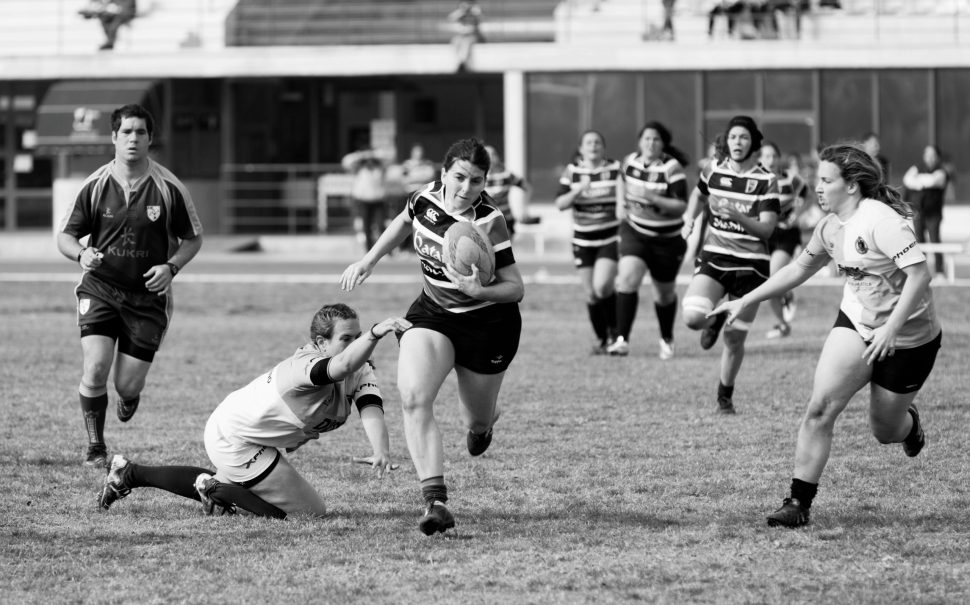
The majority of players in the top flight of women’s rugby, the Premiership Women’s Rugby (PWR), continue to rely on full- or part-time employment alongside their rugby commitments, despite training and performing at a professional level.
Earlier this year, the Women’s Rugby World Cup brought a fresh batch of spectators to the women’s game, generating record-breaking broadcast figures and attracting some of the highest attendances ever seen at Allianz Twickenham.
Despite that momentum, the remuneration cap for PWR teams, which typically have squads of around 45 players, remains low.
Although the 2025-26 cap has not been released, the cap was set at £220,000 for the 2024-25 season, a modest sum, considering it is divided among a large squad, meaning many have to maintain other jobs.
Dutch national captain and Exeter Chiefs lock, Linde van der Velden, said: “I work two days a week as an assistant architect.
“I’m lucky my job is flexible, so if we travel for a Friday game, I can pick up hours another day.
“I also help out with the marketing team at Sandy Park – maybe four hours a week, doing content with the girls or sponsor things.
“You could only live as a professional rugby player in the PWR right now if you get paid by both your club and your national team.
“The club salary isn’t one you could live off… It’s a growing thing, but we still have a long way to go.”
Van der Velden, who captains the Dutch national team and narrowly missed out on World Cup qualification, has been vocal about the need to acknowledge not only the developing professionalism within the PWR but also the financial challenges faced by international women’s teams.
Having been one of Exeter’s first international signings in 2020, arriving pre-Brexit restrictions, she has seen firsthand how visa restrictions affect overseas players who are trying to sustain themselves in a league that is not yet fully professional.
Van der Velden said: “Especially financially, that’s a big problem. As foreign players, it’s a very big problem.
“The visa some of the girls are on doesn’t allow them to work another job – but the rugby salary isn’t enough to live on.
“A lot of girls have to compromise – maybe they can’t study what they want or have to take jobs from their home country that they can do online.
“But I always say it’s important to think about life after rugby. I’m glad my dad made me finish school – it’s given me more opportunities.
“In the women’s game, you don’t finish with savings or a financial buffer. You have to think early about what comes next.”
England became the first nation to offer full-time professional contracts to its women’s squad in 2019, and clubs such as Saracens and Worcester were the earliest to pay their Premier 15s (now PWR) players.
Yet, because the PWR remains one of the few leagues paying women’s rugby athletes at all, it has increasingly attracted international players seeking the chance to play in a more competitive, semi-professional environment.
Velden said: “It attracts people from all over the world, which is great because it brings different styles and cultures.
“If you do what you love, it’s not draining. Since moving to England, it’s the first time I’ve ever been paid to play – I actually have the most free time I’ve ever had.
“You can see the level and financial side improving so much – and the World Cup brought in even more international players.”
“It’s important to chase your dreams. If you have the talent, it doesn’t matter where you come from.”
This aspiration is mirrored among younger players. Many emerging athletes now view full professionalism as a realistic goal, especially those hoping to follow the path of England’s Red Roses.
Bristol Bears winger and last year’s PWR Breakthrough Player of the Year, Millie David, is currently studying at university while balancing the demands of elite sport and education.
She said: “Even though I have zero spare time and I’m quite often tired both physically and mentally, I know for a fact that I’m not going to give up.
“I’ve worked too hard to get to where I am now, so even though it’s not even close to where I want to be, I have so much motivation to keep going.
“After this season I’ll hopefully be finished with my degree, so if I were to have a professional contract then all of the extra hours I spend studying could go into rugby.
“The extra hours just spent on basic skills make a world of difference in the long run.
“Having more spare time would mean I could have my entire focus be on making my rugby dreams come true.”
While younger players hope for a fully professional future, many of their more experienced teammates struggle to find additional hours in the day, often juggling careers with training, recovery, and match preparation.
David added: “It’s really clear to see how much financial pressures can affect women staying in the game.”
“There are girls training just as hard but having to occupy full-time jobs as teachers or doctors.”
“Then you add the hours of training, work in the gym, staying on top of nutrition, getting enough sleep – it can feel impossible to balance it all.”
“The standard of rugby that the World Cup stars have shown is so inspiring to me; it shows how far you can go when you’ve got the support and the resources to get better every day.”
Clubs do provide high-performance support, but the value of those resources depends heavily on when training sessions take place.
For players with jobs, evening sessions can be physically and mentally draining after a full working day.
Loughborough lighting centre and England U20, Carmela Morall, said: “The Lightning schedule isn’t really built around people who work – it’s mainly for internationals who are full-time.”
“The girls who come in after working a full day are knackered, then have to motivate themselves for a physical session.”
“They miss out on skills, gym, and meetings – so they have to catch up, talk to coaches, or find out what they missed before game week.”
“It’s tough because we have a lot of meeting content about the opposition – so they really have to be proactive to stay on top of things.”
The impact of the Women’s World Cup is already beginning to filter through to the PWR. Several clubs have reported increases in matchday attendance and streaming figures since the start of the season, and expanded broadcast coverage is helping the league reach new audiences.
Carmella added: “They’re putting things in place to get more people to come, so visibility is something they’re really pushing.
“Saints are trying to up our average crowd from around 1,700 last year to at least 2,000 per game.
“I think the new TNT and BBC coverage will be really good for the league. Last year, half the games weren’t streamed, even my parents abroad couldn’t watch them.
“This year, every game is streamed, so friends and family everywhere can watch. That will help grow the game and make the PWR more global.
“The future of women’s rugby is so bright, with the World Cup and all the media coverage, it’s really positive for us as young players.
“If professionalism comes in while we’re still playing, it would be a massive step for women’s rugby and its future.”
Featured image credit: Quino Al on Unsplash.

Join the discussion