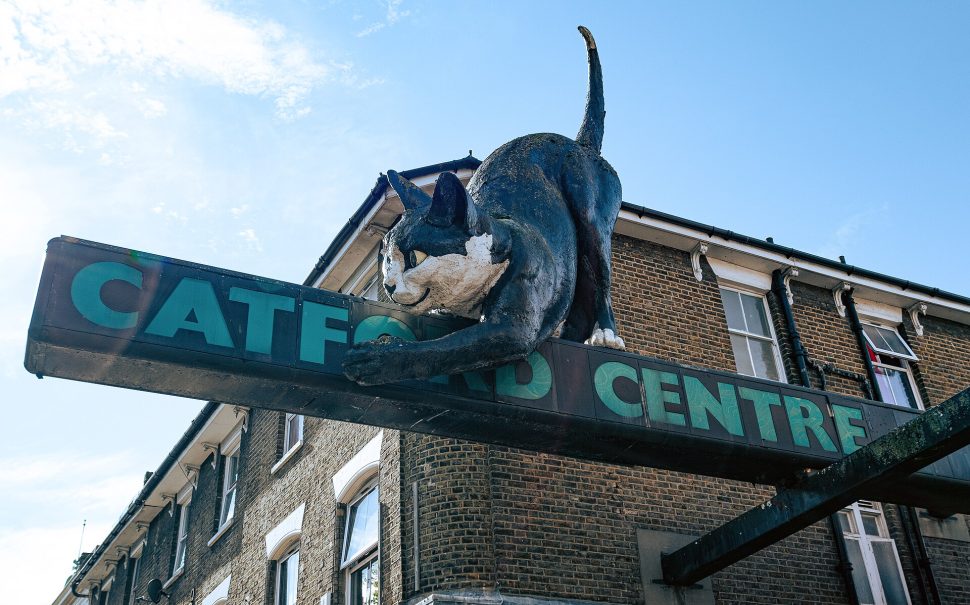
For years, Lewisham was one of the only London boroughs without a cinema. After a long string of false starts and a dramatic eviction, that’s finally about to change.
For generations, locals have had to travel to Greenwich, Bromley or beyond for what most Londoners take for granted. Lewisham, a borough of more than 300,000 people, spent much of the past two decades as one of London’s last remaining cinema-free zones.
That wasn’t always the case. In the 1930s, the borough had more than 20 cinemas, including the grand Gaumont Palace on Loampit Vale, which could seat more than 3,000 people.
By 1986, the last one had closed. The building was demolished a decade later for a road scheme.
According to the UK Cinema Association, there were 825 cinemas operating across the UK in 2024, down from 879 in 2020.
For Lewisham, the question was never about choice. It was about having anything at all.
The first real crack of light came in 2019, when Really Local Group (RLG) opened Catford Mews, a three-screen community cinema, bar, food hall and co-working space, in a converted former Poundland store in the Catford shopping centre.
It was the first new cinema in the borough in a generation.
For five years it served the community, becoming what many locals described as the heart of Catford. For resident Anneliese Devine, it was as much about the creative life of the area as the films themselves.
“I visited Catford Mews for the cinema and the independent maker and arts fairs that were held there,” she said.
Then, in October 2024, it was gone, suddenly and without warning.
“It was disheartening when it closed. It felt like a clear sign of decline – both for independent arts spaces and for Catford generally.”
Catford Regeneration Partnership Limited (CRPL), a company fully owned by Lewisham Council, repossessed the building, claiming RLG had run up arrears of over £650,000 since 2019.
RLG disputed the figure, arguing the council had included Covid-period rent it had never been billed for and that a new 10-year lease had been agreed just months earlier. For residents watching on, the manner of the closure stung as much as the loss itself.
“The breakdown between the council and the previous tenants was very public and badly handled,” Devine said.
A petition, calling for the cinema to be saved, gathered more than 8,000 signatures within days. Devine said the strength of that response proved the appetite was real: “The response to the Catford Mews petition showed there is demand for an affordable cinema and creative hub in the area.”
By March 2025, RLG had been placed into liquidation. Official documents filed at that point put the company’s debt to the council at £387,000 – far below the £650,000 the authority had cited when it took the building back. The premises were occupied by squatters in April 2025.
Fifteen months after the eviction, good news finally arrived.
In February 2026, Lewisham Council announced that The Castle Cinema – an independent, crowd-funded picture house from Hackney that opened in 2015 – would take over the former Catford Mews site.
Trading as Castle Catford, the venue will reopen in summer 2026 with three screens, a bar, café and the food court at the front of the building.
“We know it’s been a long wait but the council is pushing to open Castle Catford as soon as possible,” said Councillor Daniel Dream, Cabinet Member for Inclusive Regeneration, Planning and Housing Delivery at Lewisham Council.
The Catford announcement came just days after another: Irish cinema operator Arc Cinemas has agreed to operate a nine-screen multiplex at the troubled Lewisham Gateway development, close to Lewisham station, built and owned by Get Living.
The site has had troubles of its own: a major water leak forced residents out of the new blocks just months after they moved in, holding up the commercial units, while the cinema’s original operator, Empire, collapsed in 2023. The new venue, Arc’s ninth in the UK, is expected to open in 2027.
“Arc Cinema at The Filigree is a privately owned site, so the Council has limited control,” said Cllr Dream.
“We are working with Get Living to reopen the Filigree at pace, after major remediation works. Leases are in place and Arc remains the cinema operator.”
Lewisham is not alone in struggling. According to the Independent Cinema Office, around 45% of independent cinemas were operating at a loss in 2023.
The post-pandemic recovery for cinemas has been slow and uneven, with rising energy costs, audience fragmentation and streaming competition all weighing on operators.
Additionally, the Ladywell Playtower was, until recently, earmarked for a cinema of its own. A scheme approved in 2022 would have carved a four-screen cinema and 33 homes out of the Gothic landmark, but it collapsed when the developer pulled out over rising costs, and the council scrapped the agreement.
Now the building is the subject of a fresh restoration search. In June 2026, the council shortlisted four organisations from seven bids: Hackitt CIC, Liquid Listening, RUSS (the Rural Urban Synthesis Society) and Turner Works.
“Four organisations have been shortlisted to develop plans for Ladywell Playtower,” said Cllr Dream.
“Detailed proposals will be submitted over the summer, when residents will have the chance to share their views. The focus is on bringing the building back into community use.
“We aim to appoint a restoration lead by the end of 2026.”
He added: “This is a really positive step in restoring this historic building and making sure it’s looked after for the long term.
“I’m excited about the Playtower’s potential and the organisations shortlisted so far. Working with my new Ladywell ward councillors, we’ll make sure local people are right at the heart of what happens next, so it becomes a place we can all feel proud of for generations to come.”
For the first time in a generation, Lewisham is on the verge of having not one but two cinemas. For residents who have spent years driving to Greenwich or Bromley just to see a film, that’s a remarkable turnaround.
Featured image credit: London Less Travelled

Join the discussion