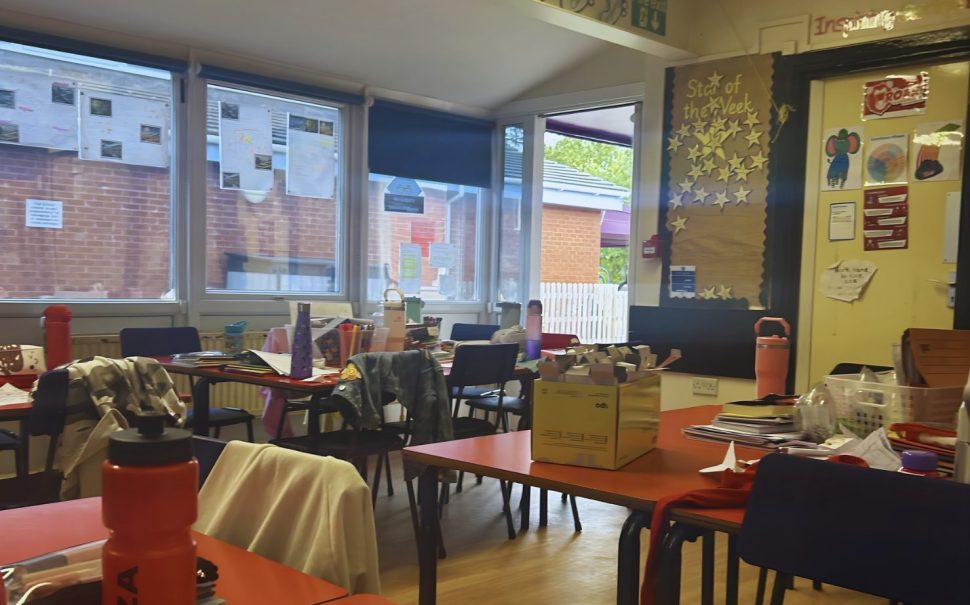
Greenwich’s home education rate is now the highest in London and exceeds the national average after the capital recorded a near 50% rise over three years, Department for Education data shows.
In autumn 2025/26, 1.6 children per 100 pupils in Greenwich were recorded as electively home educated, compared with 1.53 nationally, bringing London’s total to 12,620.
The increase comes as the government moves to strengthen oversight of children not in school following the murder of 10-year-old Sara Sharif by her father and step-mother, with proposed legislation requiring councils to visit families shortly after a child is removed from the school roll.
The case prompted a national review into how children educated outside school are monitored, after it emerged she had been removed from the school system before her death, raising concerns about safeguarding.
This places Greenwich above all other London boroughs, with rates more than three times higher than the lowest areas in the capital.
Havering has recorded the fastest growth since 2022, with its home education rate increasing by 71%, followed by Barking and Dagenham and Bexley.
National data also shows that the reasons parents give for home education have shifted, with mental health overtaking philosophical or preferential choice as the most commonly recorded factor.
Mental health was cited in 27.5% of cases in 2025/26, up from 17.1% in 2022/23, while philosophical or preferential reasons have declined from nearly 30% to 22.5% over the same period.
Lifestyle-related reasons have increased gradually, and school dissatisfaction rose sharply in 2023/24, then stabilised.
Although the data does not establish causation, national figures show that children with special educational needs are disproportionately represented among those educated at home.
Pupils with Education, Health and Care Plans account for around 8% of home-educated children compared with roughly 4% of the overall school population.
The concentration is particularly marked among secondary-age pupils, with home education most common in Years 7 to 9.
While the data shows a peak in the early secondary years, Wendy Charles-Warner, co-chair of the home education organisation Education Otherwise, said the rise was less about transition itself and more about unmet needs that grow as academic demands increase.
She said: “Children don’t grow out of special needs.
“When support is reduced in secondary school, those unmet needs often present as mental health difficulties.”
She believes that many families felt forced into home education rather than making a purely philosophical choice.
The spokesperson said: “For a large proportion of parents, this isn’t about rejecting school.
“It’s about feeling they have no viable alternative when their child’s needs are not being met.”
Charles-Warner also pointed to movement from the independent sector in some London boroughs, citing unusually high proportions of new home education registrations coming from fee-paying schools in areas such as Redbridge and Hammersmith & Fulham.
She said financial pressures and school closures may be contributing to that pattern, particularly where parents believe mainstream provision cannot adequately support complex needs.
However, she warned against conflating oversight of home education with child protection.
She said: “Local authorities already have a duty to respond to safeguarding concerns for any child.
“An annual education meeting does not replace that responsibility.”
While London’s overall home education rate remains below the national average, the gap has narrowed since 2022, as both the capital and England have recorded sustained year-on-year increases.
Cllr Ian Edwards, London Councils’ executive member for children and young people, said boroughs were focused on ensuring children educated outside school receive appropriate support.
He said: “Recent data from the Department for Education shows that elective home education has risen in London in recent years.
“London boroughs’ priority is to ensure every child is safe and receiving a high-quality education. As the number of children educated at home grows, it is important that boroughs have the appropriate support from the government to meet their safeguarding responsibilities.
“We will continue to work constructively with families to promote positive outcomes for children across the capital.”
In boroughs where rates now exceed 1.5 pupils per 100, home education is no longer a marginal choice but an increasingly visible part of the education landscape.
With new legislation set to expand local authority oversight, London councils will be required to monitor an increasingly large cohort of children educated outside the mainstream system.
Featured image credit: Amelie Claydon


Join the discussion