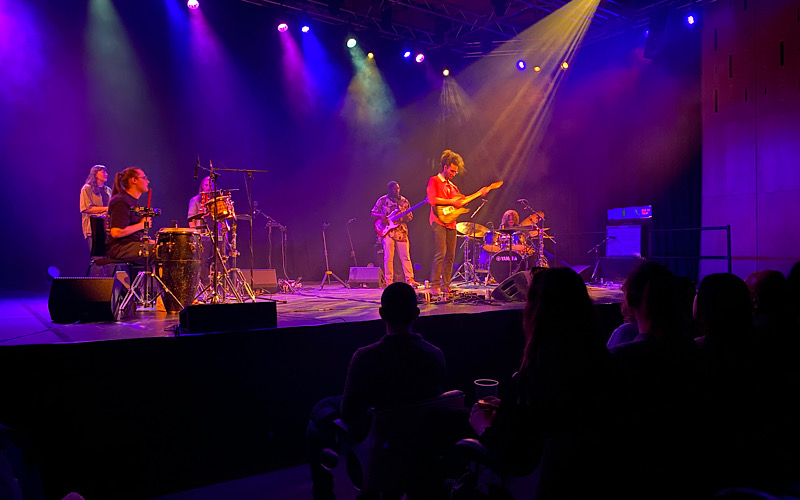
Swiss-Palestinian drummer Ramzi Hammad and Collective was spotlighted during the Montreux Jazz residency at the Southbank Centre.
The gig focused on how migration has affected jazz, with a setlist curated by Hammad and the accompanying band.
The 26-year-old musician started when he was 10, inspired by his father’s affinity for the Darbuka – a traditional Arabic drum.
Hammad said: “He taught it to me when I was a small child, and in my family, it’s expected that you learn an instrument at some point.”
This family bond came through at the Southbank Centre show as his father was in the audience watching his son perform, something Hammad called a ‘dream’.
Hammad played a mixture of original songs and covers, all of which highlighted his unique style of percussion and rhythm.
Among them was Olive Tree, the opening song of his Melting Pot EP which was inspired by his Palestinian heritage.
The track opens with a fast-paced rhythm which charms listeners to start dancing, before introducing a slower Afrobeat-inspired section.
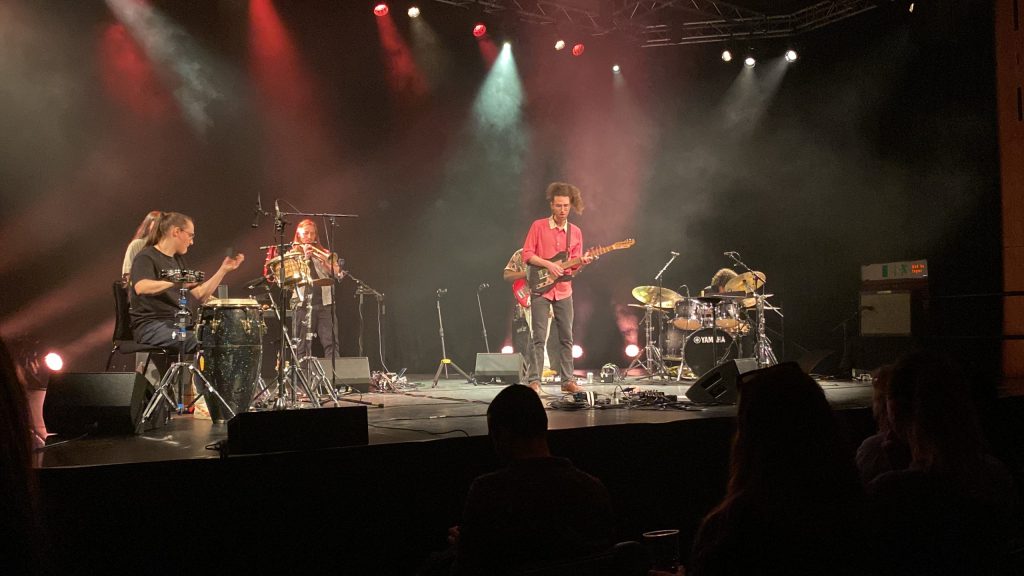
This mixture of sounds and styles is what Hammad grew up listening to, and his influences come from Arabic and North African music as well as flamenca, hip-hop, and the UK jazz scene.
Hammad also referenced Picasso’s quote of “Good artists borrow; great artists steal” when speaking about his musical process.
He said: “I’m not sorry to use the music I listen to.
“When I listen to music, I feel like I could do this part, but maybe play it on a different instrument, or change it up a bit.”
For Hammad, this reflects the evolution of jazz, from migration and the borrowing of other styles of music to create something new.
Jazz emerged in the late 19th Century and was already hard to define from its creation, having roots in blues, ragtime, brass-band marches and spiritual traditions.
Hammad adds to this constantly evolving genre with his songs, which feel like a gap in time between ancient percussion styles and modern guitar riffs.
He places the listener in his head at the moment of composing, where they can pick out each individual style and influence.
Hammad said: “What I’m always trying to do is find an essence in different styles of music, I try to find deeper musical aspects that don’t come from one specific tradition.”
Feature image: Val Raguy Dunn

Join the discussion