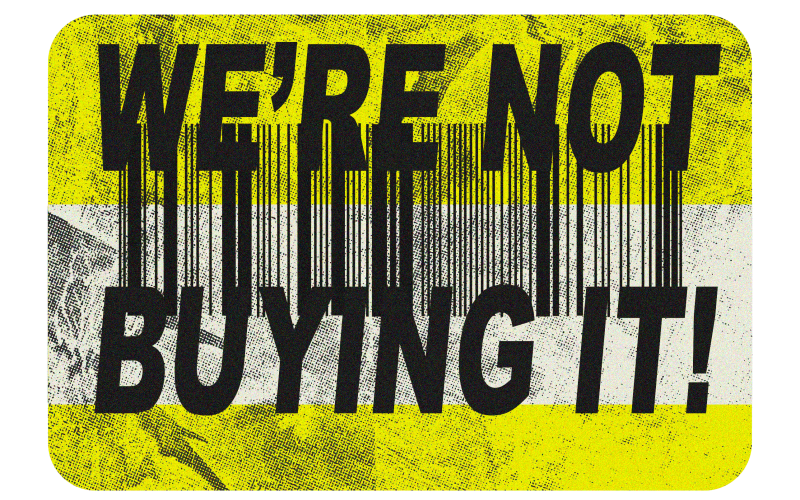
A viral campaign is calling for customers to boycott supermarkets on 28th October to pressure the government to introduce price caps for essential food items.
The nationwide boycott has been prompted by We’re Not Buying It and will take place on the same day that John Healey announces the first budget of Andy Burnham’s government.
The campaign was sparked by the cost of living crisis and inflation – We’re Not Buying It claimed the price of a weekly shop has doubled since 2020.
Croydon resident, Ife Nove, 32, said: “When you have a crisis you’re meant to act upon it.
“The government is talking about how it wants to increase productivity, but how can we have a productive society when a large part of society is wondering about where they’re going to get their next meal from?”
A spokesperson from We’re Not Buying It explained that the intention of the boycott was to “meet people where they’re at.”
They said: “You don’t have to be a professional campaigner to make a change.
“It’s something that can unite us across the political spectrum, because it’s not about being part of a political party, it’s just about being able to feed ourselves.
“Food is a basic need and we can all get behind the fact that people should be able to eat and families should be able to afford food.”
Nove argued that children should not be going hungry in the world’s fifth-largest economy.
He said: “We’re seeing a lot of food insecurity whilst massive supermarket brands profit.”
12.2% of households were food insecure in June 2026, up from 9% in 2024-25.
The Office for National Statistics (ONS) revealed that families spent an average of £73.70 per week on food and non-alcoholic drinks in 2025, up by £3.20 (5%) from 2024.
Furthermore, lower-income households are being hit the worst: households in the lowest-income decile spent 15.6% of overall spending on food, compared to just 7.1% for households in the highest-income decile.
As well as spending a higher proportion of their weekly expenses on food, low-income households are more likely to already be choosing the lowest-cost food items, so do not have the option to switch to cheaper food when prices rise.
The Institute for Fiscal Studies found that cheaper, lower quality versions of necessary items increased in price faster than other products, which disproportionately affected lower income households.
In September 2026, 61% of people’s cost of living had increased over the previous month, and 95% of those whose cost of living had increased reported that the price of food was one of the reasons for this, according to the ONS.
We’re Not Buying It was started by a group of young people from working class or low-income backgrounds who were concerned about the cost of living crisis, and became inspired by protests in Croatia.
After a call with campaigners in Montenegro, they set up We’re Not Buying It and quickly reached over 77,000 followers across Instagram and TikTok.
Over 26,000 people have pledged to boycott, and half of all pledges came from social media and the collaborations We’re Not Buying It had managed to secure; the rest of the pledges came from leafleting done by supporters of the campaign.
Alongside the boycott, We’re Not Buying It will picket outside of supermarkets on the 28th in Acton, Whitechapel and Manchester.
We’re Not Buying It have stated their intent to continue protests and civil resistance action until the government agrees to instate price caps on essential food items, and said they will release information on further activity following the outcome of the boycotts on the 28th.
Featured image credit: We’re Not Buying It (used with permission)



Join the discussion