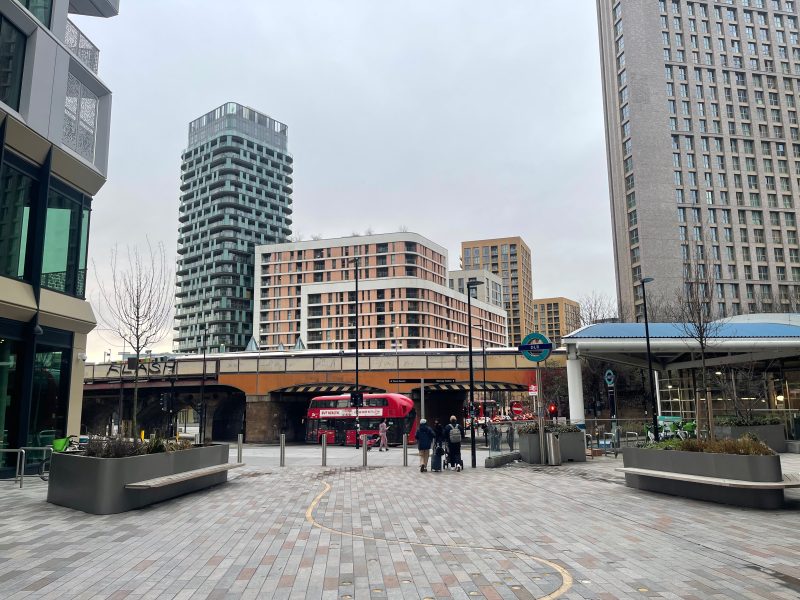
Lewisham recorded the highest number of domestic abuse homicides in London over the past five years, new Metropolitan Police data has revealed.
The South London borough reported 10 between July 2020 and June 2025, an increase from three in July 2015 to June 2020.
Neighbouring Southwark had seven and Croydon just south of the two recorded nine (the second most) – as the South East reported the most per area.
Lewisham’s rise comes despite a fall in overall homicides across London, which dropped from 678 to 577 over the same timeframe.
While, domestic abuse-related killings increased in the capital from 93 to 101 cases – underlining Lewisham’s numbers weren’t an anomaly.
These figures were calculated by comparing Met Police-recorded domestic abuse homicides over two consecutive five-year periods, and the term ‘homicide’ is used as it includes murder, manslaughter, and infanticide. Rates were not population adjusted.
As domestic abuse homicides have surged, Head of National Domestic Abuse Helpline at Refuge, Emma Pickering, slammed police actions in responding to domestic abuse cases.
She said: “Police responses to domestic abuse are often inconsistent or inadequate as a result of gaps in training and weaknesses in risk assessment processes.
“For the few police reports that do result in a charge, survivors often face a long and traumatic court process, deterring many from accessing justice.
“Survivors are too often silenced by the stigma and myths surrounding domestic abuse, and they are too afraid to report the abuse they’re facing, fearing they won’t be believed.”
Pickering added migrant victims in particular can fear reporting abuse due to concerns around deportation.
One in four people in the UK have experienced domestic abuse since turning 16-years-old in 2025, The Office for National Statistics data estimates, compared to one in five in the survey year ending in 2024.
These statistics underline that domestic abuse is widespread and affects millions of people across the UK.
And for domestic abuse cases escalating to fatal-outcomes, there has been a 9% increase over the past five years, compared to the five previously.
This comes despite a 15% decrease in total homicides across London, signalling domestic abuse homicides aren’t reducing in London, and they’re becoming more frequent than homicides in general.
Head of Domestic Abuse and Sexual Violence Prevention, Alessia Bianco – at domestic abuse support charity, Hestia – provided insight into why it can be difficult to identify high-risk victims of domestic abuse homicide.
Bianco said: “It’s not an exact science. That’s why we see domestic homicides where the victim wasn’t assessed as being high risk.
“Risk can change quickly, and fatalities can occur during periods of escalation, particularly when violence becomes more severe or controlling behaviour intensifies.”
Figures also show older people account for a disproportionately high share of domestic abuse-related killings, compared to other types of homicide, in comparison to other age groups.
This raises public awareness that domestic abuse isn’t only a young-adult problem. 65+ adults are the most likely group to be killed via domestic abuse if they are involved in a homicide, with 40% of the total homicides at that age involving it over the past five years.
But Bianco claimed elderly people’s experiences have been historically under-reported and only recently have they started having their data collected.
Bianco said: “It was only recently that the ONS included adults over 65. For decades, we didn’t know how many older people experience domestic abuse.
“It could be an increase, or it could be that people are now reporting abuse because they are finally being asked.
“I can’t say if older people are at higher risk, because we simply don’t have the data.”
The Institute for Non-Fatal Strangulation created a study that showed if someone is strangled or suffocated, they are seven times more likely to be killed as a result of domestic abuse.
Non-fatal strangulation is to be a stand-alone offence!
— Centre for Women's Justice (@centreWJ) March 1, 2021
Our press release on the news here: https://t.co/KtHEI93gkn pic.twitter.com/cECH9pK4V6
Bianco said: “Quite often we see incidents of strangulation, suffocation or choking.
“Other warning signs that could be a precursor to homicide is an escalation in the violence people are experiencing, particularly physical violence.
“Domestic abuse thrives in isolation. Often a perpetrator will be working towards that ultimate goal of isolation.
“When stalking and harassment happen – we’re seeing more and more in the digital space – there’s massive risk factors in terms of domestic homicide.”
These danger signs can help people recognise what early warning signs can lead to homicidal abuse.
In a bid to reduce escalative cases, Hestia have announced a new national billboard campaign this month encouraging victim-survivors of domestic abuse to make use of ‘Safe Spaces‘ over the winter.
Hestia has launched a new national campaign encouraging victim-survivors of #DomesticAbuse to make use of Safe Spaces.
— Hestia (@Hestia1970) January 8, 2026
🏦 Safe Spaces are in pharmacies and banks across the UK and their consultation rooms are for people experiencing #DomesticAbuse. [1/3] pic.twitter.com/UqGOdoYAhn
The high-street banks and pharmacies-backed initiative has targeted increasing awareness and support for those at risk, and as part of the launch, Hestia CEO Patrick Ryan highlighted the winter challenges victims often face in a statement.
Ryan said: “Winter can be a particularly dangerous time for those experiencing domestic abuse. More time at home, financial pressures, and higher alcohol consumption can increase isolation and risk, while access to support services may be limited.
“This campaign promotes ‘Safe Spaces’, places where anyone feeling unsafe can escape, and find the support they need. Everyone deserves to be safe and no one should suffer in silence.”
The Met Police declined to comment.
If you have been affected by any of the issues raised in this story, or are in danger, please seek immediate help from local emergency services or a trusted support organisation, such as Hestia on 0808 2000 247.
Feature image: Callum Milne

Join the discussion