
Scammers are advertising fraudulent Construction Skills Certification Scheme (CSCS) cards online to unqualified construction workers.
CSCS cards are used across the UK construction industry as proof workers hold the appropriate qualifications to safely access building sites, with sellers are advertising them online for hundreds of pounds.
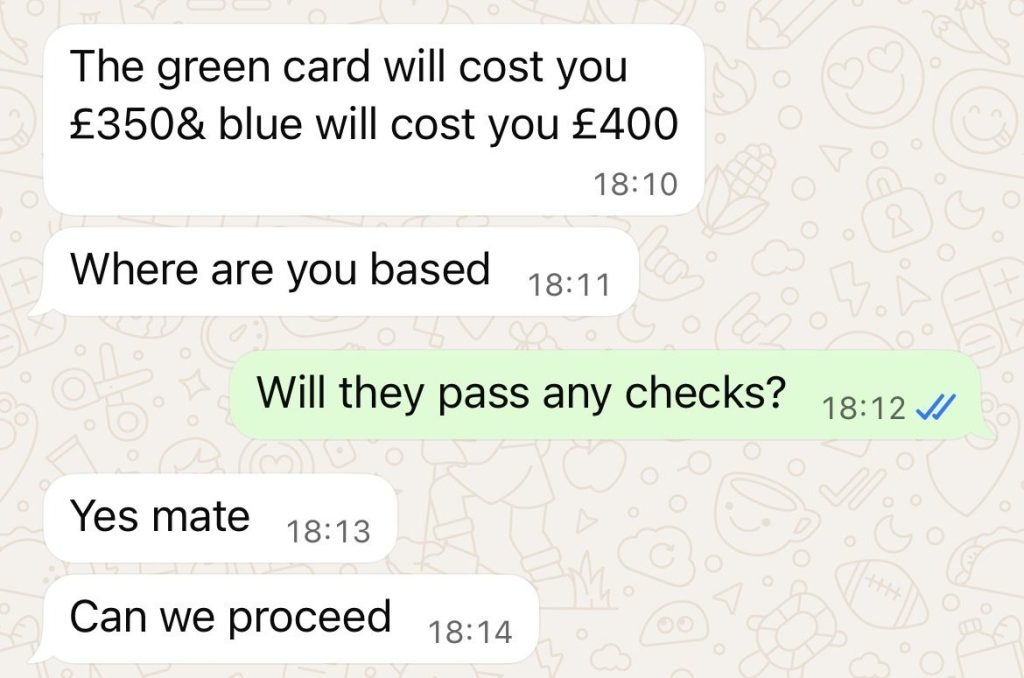
Basic CSCS cards were promoted from £350 and more advanced cards, such as the blue-skilled worker card, advertised for around £400.
By contrast, the legitimate cost of obtaining a CSCS card can be as little as £58.50.
In messages and adverts seen by the South East Londoner, sellers claimed the cards can pass existing security checks and only basic personal details would be required to produce them.
Advertisements for the services appear across multiple platforms, including Facebook Marketplace, eBay and Instagram.
Some sellers operate dedicated websites claiming the practice is legal, while others appear to target vulnerable groups, including non-English speakers and migrants.
Romeo Butacel, 40, who works on a construction site in Peckham, said: “It’s not really about individuals – everyone needs to have a CSCS card.
“A CSCS card doesn’t really say whether you’re a proper tradesman or not.
“Once you get into NVQs, that’s what shows you’ve got experience and that you’ve actually been doing the job.”
Cards are administered by the CSCS, while the qualifications required to obtain them, including National Vocational Qualifications (NVQs) and health and safety training, are overseen by the Construction Industry Training Board (CITB).
The CITB is responsible for supporting training and skills development across the construction industry.
Gani Muja, 31, a bricklayer working on the same site in Peckham, believes the system places too much emphasis on certification rather than competence.
Muja said: “For me it’s just a piece of paper, unless you actually know what you’re doing as a bricklayer,
“A lot of people do get cards off the black market.”
However, he added unqualified workers are often quickly exposed on site.
Muja said: “You will get found out. There’s a bricklayer who can’t do the job, so what NVQ have you done?”
Muja also questioned the value of repeat training requirements, particularly when renewing the Site Management Safety Training Scheme (SMSTS), believing spending five days on a course was not always proportionate to the skills gained.
The CITB maintains the SMSTS is a safety-critical product, and is the way they ensure the industry works and operates safely.
A CITB spokesperson said the construction industry has helped shape what should be contained within the standard, and the content drives the length of the programme.
A health and safety executive working on the same site defended the use of CSCS cards.
He stated they provide a basic level of assurance workers understand common risks found on construction sites.
Speaking to the South East Londoner, the executive added the cards confirm awareness of hazards such as working at height, excavations, and slips, trips and falls.
However, the health and safety professional warned the requirement to renew CSCS cards every five years may be contributing to the growth of a fraudulent market.
Concerns around the integrity of testing are not new.
A BBC Newsnight investigation in 2015 uncovered exam centres rigging health and safety tests to guarantee candidates passed.
Data obtained by the South East Londoner under the Freedom of Information Act showed 863 CSCS cards were revoked by the CITB in 2024 following referrals from law enforcement agencies, including Immigration Enforcement.
That figure was 112 between January and September 2025.
The same data shows that four test centres were terminated and two suspended in 2025.
In a statement, a CITB spokesperson said more than 2,200 incidents of fraud had been reported to or dealt with by its fraud team over the past three years.
The CSCS were contacted for comment.
Feature image credit: Free to use from Unsplash/Danist Soh




Join the discussion