The number of people seeking asylum in the UK has almost doubled over the past five years, with many seeking safety in the capitals’ Boroughs of Sanctuary such as Southwark and Lambeth.
In the view of Waterloo Community Counselling, the first step to building a new life is a sense of understanding best achieved through language.
For two decades, the south London charity has offered ‘life changing’ mother-tongue counselling to refugees and asylum seekers free of charge.
One client of the service said: “I can freely express myself to someone who truly understands me in ways others cannot.”
What began as a small initiative with a handful of counsellors and interpreters has grown into one offering talking therapies in more than 23 languages and dialects.
Away from home and with very few belongings, often the heaviest weight they carry is the trauma they have endured.
Over 70% of clients who accessed the service last year were survivors of modern slavery, human trafficking, or torture.
A considerable number had experienced persecution due to their sexual, gender, religious, ethnic, or political identities.
Lucian Dee, the charity’s community partnership and fundraising manager, said: “Most of the clients we see come with loads of trauma, related to experiences both from their country of origin and here now, in London.
“They probably need years and years of mental health support.”
Another client of the service, who is a survivor of domestic abuse and trauma, said: “Before therapy, I was in a dark place, very much isolated, struggling with depression and anxiety, and I thought my life was over.
“Therapy brought me back to life, and I honestly feel like I have been given a second chance.”
Now in its 20th year, the service supported 394 vulnerable migrants, refugees, and asylum seekers from 75 different countries.
WCC found 83% of those clients reported feeling less lonely or isolated after accessing multilingual counselling.
The client added: “I was sitting with lots of pain, guilt, self-blame, anger – I had lost my confidence and given up on life.
“But therapy helped me to recover what I have lost, and make me feel like I have found myself again.”
WCC began as a local community health project in the 1980s and registered as a charity in 1995.
Beyond its multilingual counselling service, the charity has offered accessible mental health support to Londoners at little to no cost for three decades.
Many of its multilingual counselling clients having no recourse to public funds and the majority of funding for the project comes from partnerships with 213 community organisations.
Clients are referred to the service either by themselves or by someone on their behalf, such as a GP or refugee support service.
While high demand has closed the waiting list at times, once accepted onto the programme a client will have an initial 90-minute consultation with a counsellor to determine the issues they are facing, such as whether they have access to stable accommodation.
Once they start their counselling, clients are seen on a weekly basis by a counsellor who speaks their language.
Dee said: “Some of our counsellors came to the country themselves as refugees and migrants, and now offer counselling to our clients in their mother tongue.”
One client added: “It’s a unique space where I can feel heard and accepted, allowing me to share aspects of myself that I wouldn’t feel comfortable sharing anywhere else.”
To meet the complex needs of asylum seekers, WCC has also developed a psychological support group.
As well as counselling, WCC offers a wider network of support to refugees and asylum seekers, including regular social activity groups.
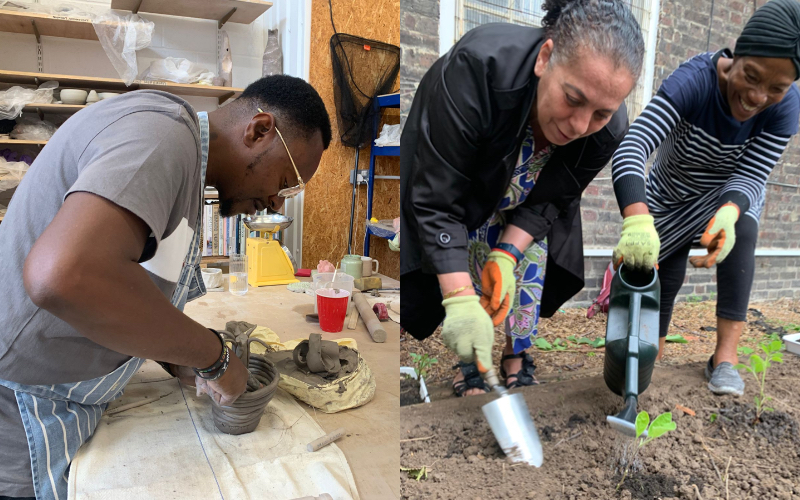
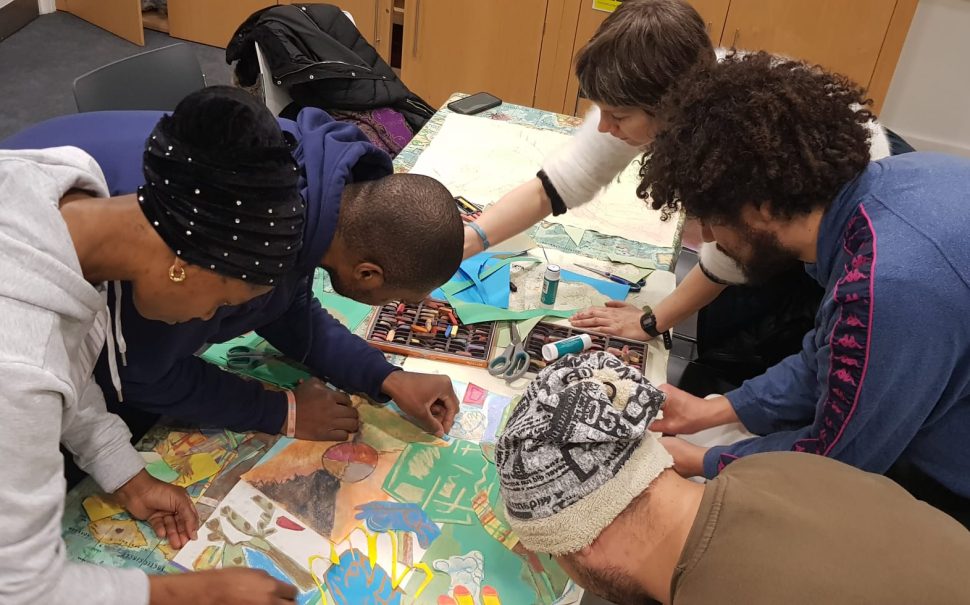
Social activities range from trips to museums and galleries to regular pottery and gardening clubs, hoping to provide a much-needed sense of community.
One client said: “After sharing my thoughts and feelings I felt light.
“The outdoor activities and engaging with new people helped me a lot to get rid of my loneliness.”
The charity’s newest initiative is a men’s mental health discussion group, which began last week.
The group aims to provide continued support to those who have previously accessed multilingual counselling, aimed particularly at young men who have come to the UK unaccompanied.
This is in addition to an existing long-running women’s craft group, which meets monthly.
The charity also works to combat the challenge of digital exclusion by offering SIM cards and mobile phones, as well as donated laptops.
Partnerships with the Trussell Trust and Thread Ahead allow the charity to issue foodbank vouchers and provide new clothing along with other essential items.
WCC signposts clients to a network of services across London, such as English classes and housing and immigration advice.
Dee added: “They have the support of the organisation behind them to hopefully offer some sort of stabilisation or support during a difficult period of their lives.”
*Testimonials from those who have accessed the service were provided by WCC. These individuals have been anonymised for safeguarding.
Featured Image: Waterloo Community Counselling
Join the discussion