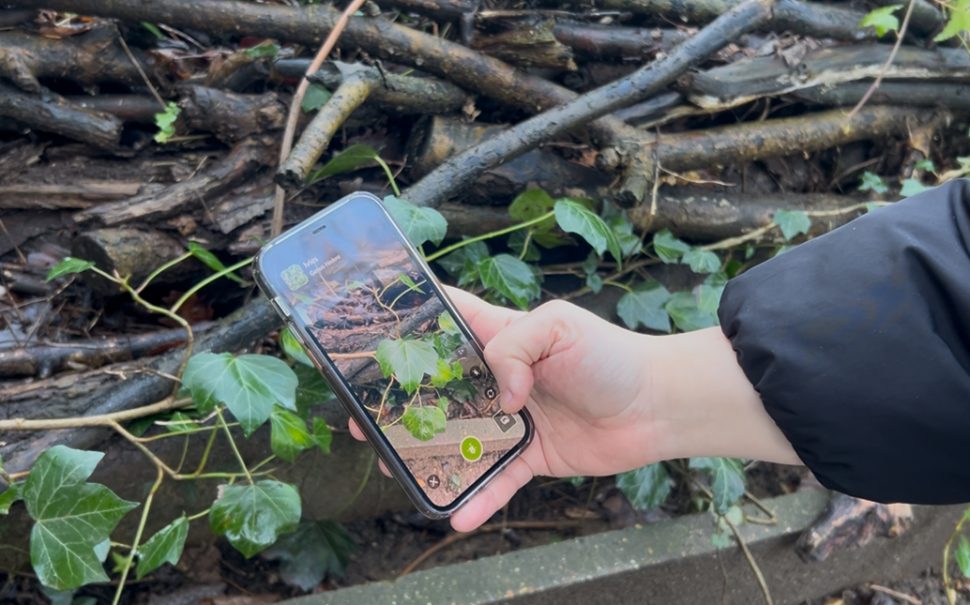
Londoners are being asked to help collect wildlife data in the capital as conservation groups increasingly turn to the public to monitor biodiversity in urban areas.
A Winter Bioblitz run by London Wildlife Trust brought volunteers into Sydenham Hill and Dulwich Woods, where they used their phones to record plants, insects and fungi as part of a coordinated data-gathering effort.
The information collected is fed into national databases used by conservationists to track species distribution and assess the health of London’s green spaces amid growing environmental pressure.
Participants photograph what they find and upload their observations to the iNaturalist app, where records can be verified and added to a wider database used by conservationists to track biodiversity.
The South London woodland, covering around 25 hectares, is home to hundreds of species and forms part of a wider network of green spaces that conservation groups say are increasingly important for wildlife in urban areas.
Organisers say public involvement is essential, as collecting data at this scale would otherwise require significant resources.
By taking part, volunteers contribute to long-term monitoring that helps identify changes in species distribution, seasonal patterns and the overall health of ecosystems across London.
Participants attending the event said the bioblitz offered a chance to learn more about their local environment, with some describing it as an eye-opening experience that changed how they viewed familiar woodland spaces.
Citizen science initiatives like bioblitzes are becoming more common across the capital as environmental organisations look to engage residents while improving the quantity of wildlife data.
London Wildlife Trust runs similar events throughout the year, building a broader picture of how nature is responding to pressures such as development, pollution and climate change.
While a single bioblitz provides only a snapshot, conservationists say repeated events and sustained public participation can help inform future conservation priorities.
Featured image credit: Amelie Claydon

Join the discussion