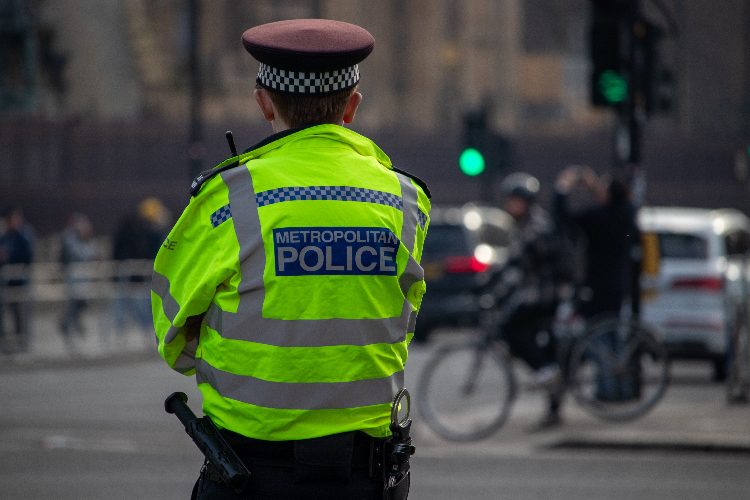
Sexual misconduct is the second most frequent allegation recorded in cases involving officers dismissed, according to Metropolitan Police data – but the number may still be underreported.
A total of 63 sexual conduct allegations against police officers were recorded in misconduct hearings between January 1 and October 31 2025, which corresponds to 22% of all the 282 allegations.
Those hearings ended with the dismissal of 101 officers during that period, data obtained through a Freedom of Information request shows.
However, the real number of improper sexual behaviour allegations may be even higher, since they can also be logged under broader categories, such as ‘discreditable conduct’.
From 2021 to 2024, the number of sexual-related allegations recorded in misconduct hearings has increased from 1 to 50, and since 2023 it remains as the second most frequent complaint.
Discreditable conduct is the most frequent allegation present in the reports for at the last five years, and it is defined by the Code of Conduct as a ‘disorderly’ behaviour or ‘likely to bring discredit on the reputation of the force’.
Because of its broad definition, it may include a variety of behaviours, including sexual, and also covers behaviours that occur while not in the execution of a police employee’s duty, according to the IOPC.
A National Police Chief’s Council (NPCC) report said: “It is highly likely that the use of discreditable conduct as a category to capture inappropriate sexual behaviour or domestic abuse means that the proportion of allegations relating to these threats are higher than identified”.
In 2025, there were 121 allegations understood by the panel as discreditable conduct – 42.9% of the total count – meaning that some of the 101 dismissed officers accumulated more than one of these complaints against them.
The number is more than four times higher than in 2021.
One of the latest misconduct hearing outcomes published on the MET police website was concluded on December 18 2025, and ended up dismissing detective Eugene Emmanuel without notice.
Despite Emmanuel’s actions being categorised as breaches of ‘Authority, Respect and Courtesy’ and ‘Discreditable Conduct’, the allegation against him is described as a sexual assault.
The summary reports that Emmanuel sexually assaulted a colleague during a Christmas party, in the toilet, while he was drunk.
Published in March 10 this year, PC Jayson Lynch’s hearing also led him to a dismissal without notice.
Lynch had two allegations agaisnt him – the first one was made by seven different women, who state similar situations: unappropriate touching and sexual behaviour.
The second allegation concerns him telling a sexual joke in front of a 14-year-old girl.
The panel understood his misconducts breached three standards: ‘Equality & Diversity’, ‘Authority, Respect and Courtesy’, and ‘Discreditable Conduct’.
When asked about how the categorisation for sexual misconduct is done, a Met Police spokesperson answered: “As far as I’m aware there is no professional standard called ‘sexual misconduct’ or similar, so cases like this would generally come under discreditable conduct or whichever is most appropriate.”
The SW Londoner then questioned how the number of sexual conduct allegations was collected since there is no such category on the Home Office Statutory Guidance, for which MET declined to comment.
Director of Legal & Policy at the Police Action Centre Sophie Khan said: “The data from the Metropolitan Police shows that a separate category of sexual conduct was created post-February 2020 and that the number of cases where officers are dismissed for sexual conduct has increased year on year.
“There is also still a large number of dismissals due to discreditable conduct, however it is unknown from the data provided by the Met Police, as to how many of these cases also include a sexual conduct complaint.
“The figures suggest that there is still a serious problem with sexual conduct in the Met Police and whatever steps they have taken to address the culture after the death of Sarah Everard, clearly are not working.”
The IOPC’s definition of ‘sexual conduct’ as a category of complaint includes sexual assault, harassment and ‘other sexual conduct’, such as soliciting of prostitutes and child sexual abuse material.
It does not include, however, abuse of position for sexual purposes – these complaints would be under ‘abuse of position/corruption’.
Within the MET data, the number of abuse of position/corruption allegations against police officers tripled from 2021 to 2025.
The Independent Office for Police Conduct (IOPC) said: “We know from our own experience that there has been an increase in reporting and victims coming forward in recent years following high profile cases.”
Wayne Couzens, arrested for the abduction, rape and murder of 33-year-old Sarah Everard, and David Carrick, a convicted rapist, were cited by the IOPC as examples of impactful cases that may have led victims to break the silence before allowing possible dangerous situations to escalate.
Chair of the Independent Commission on Adult Social Care, Baroness Louise Casey recently told BBC Met police have not been doing enough to ensure a case like Everard’s never happens again.
She is the author of a report published in 2023, that showed that less than 1% of officers facing multiple allegations had been dismissed from the force.
Everard’s murder completed 5 years this month, but women who live and work in the same area she was abducted, in South London, are still scared of walking home, BBC reported.
Shareece Curran, 22, said: “I still have to take extra steps to protect myself because you never really know, it could be you next time.”
Featured image credit: Barnaby Johnson/Pixabay



Join the discussion