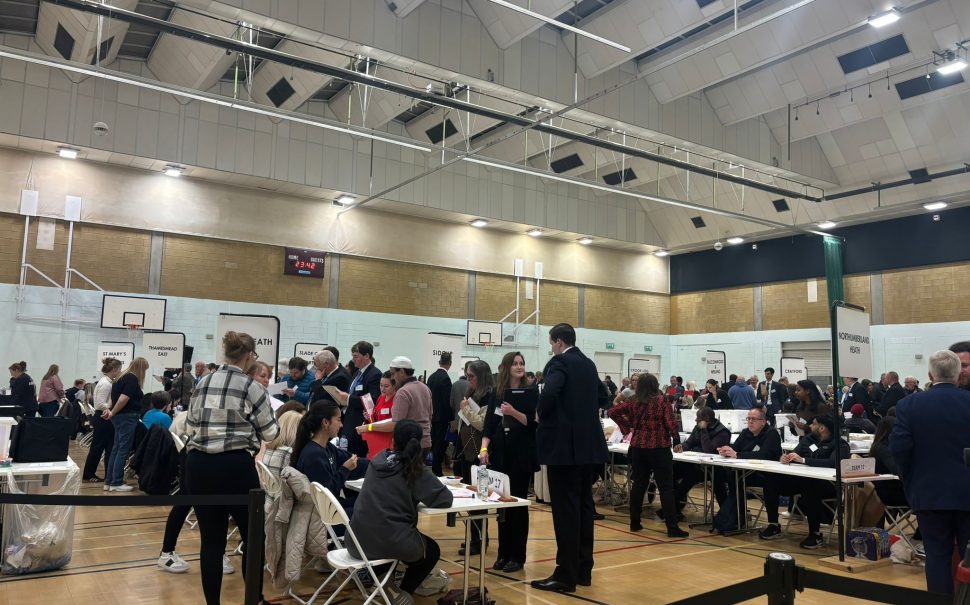
The Conservatives have continued their two-decade control of Bexley Council despite Reform UK picking up seats in the borough.
The Tories secured 26 of the 45 seats in what was expected to be a closely fought contest with Reform, while Labour haven fallen to seven seats having previously been on 10.
Nigel Farage’s party have so far gained seven seats on the council with results in a couple of wards delayed due to recounts.
Reform had entered the election with high expectations. A recent opinion poll placed the party just five points behind the Tories, leading many to believe the council was within reach.
Speaking about working alongside a stronger Reform presence, Conservative council leader Leaf said: “The biggest thing for me is to be working with council officers to try and work out what we need to get done.”
“I want to make sure we get on and fill as many potholes as we can and do all those things that people elect us to do.”
Bexley had been a blue borough since 2006 in 17 wards. In the 2022 elections, Conservatives held 33 seats in comparison to Labour’s 12.
But this time round Labour lost the Northumberland Heath to Reform who also gained the formerly Conservative territory of Crayford.
Attention was focused on the Welling area, where Reform was seen as a potential challenger due to the area’s previous voting history.
In 2009, BNP missed out on an East Wickham seat by just eight votes, while UKIP, Farage’s old party, received 29% of the 2014 votes.
Despite this history, the Conservatives did not loosen their grip on the six seats in East Wickham and Falconwood & Welling.
A Reform candidate for East Wickham, Miles Langham Jones, expressed disappointment in the Tory majority, but said he loved the community campaigns.
Labour retained its stronghold in Erith and Thamesmead East, where re-elected Nicola Taylor punched the air in celebration of this success.
Bexley was the borough in the eye of a Reform takeover, due to their opposition to ultra low emission Zones and low traffic neighbourhoods. The borough’s bid to protect its autonomy outside of public transport services reflects their longstanding independence from the rest of London.
Featured Image Credit: Romilly Schulte

Join the discussion