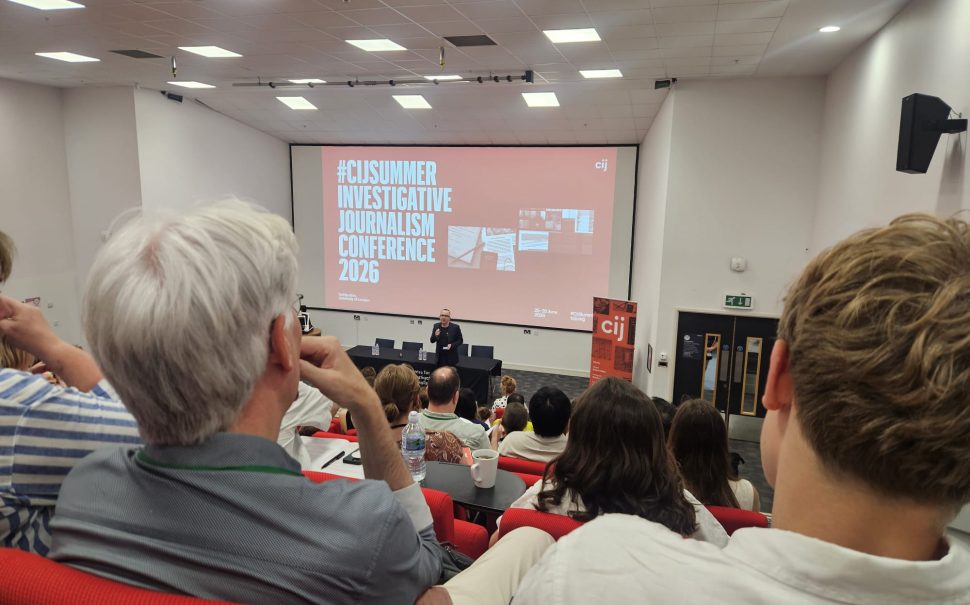
Journalists from across the world gathered at the Centre for Investigative Journalism (CIJ) Summer Conference 2026, held at Goldsmiths University on 25 and 26 June, to share experiences and investigative reporting techniques during the latest Red Extreme Heat Warning.
Attendees were somewhat reassured in the knowledge that ‘this is a casual event’ (said a CIJ email) so shorts and sleeveless tops were welcome to help people manage the heat.
Talks ranged from “Fighting Climate Dis- and Mis-Information” (Aditi Tandon) to “AI Without Prompting: Tricks to Force AI to Behave in Investigations” (Henk van Ess), “Investigating War Crimes in Occupied Territories” (Danylo Mokryk) and London Centric investigative reporter Jim Waterson’s “Fake TikTokers, Harry Potter Shops, and Snail Farms: How to Run High-Impact Local News Investigations”.
The first morning’s keynote was the Gavin MacFadyen Memorial Lecture, marking ten years since the CIJ co-founder’s death: Hope Not Hate researcher Harry Shukman discussed his year going undercover in the British far right for Channel 4 documentary, Undercover: Exposing the Far Right – throwing the audience straight into the deep end of what serious investigative reporting can demand.
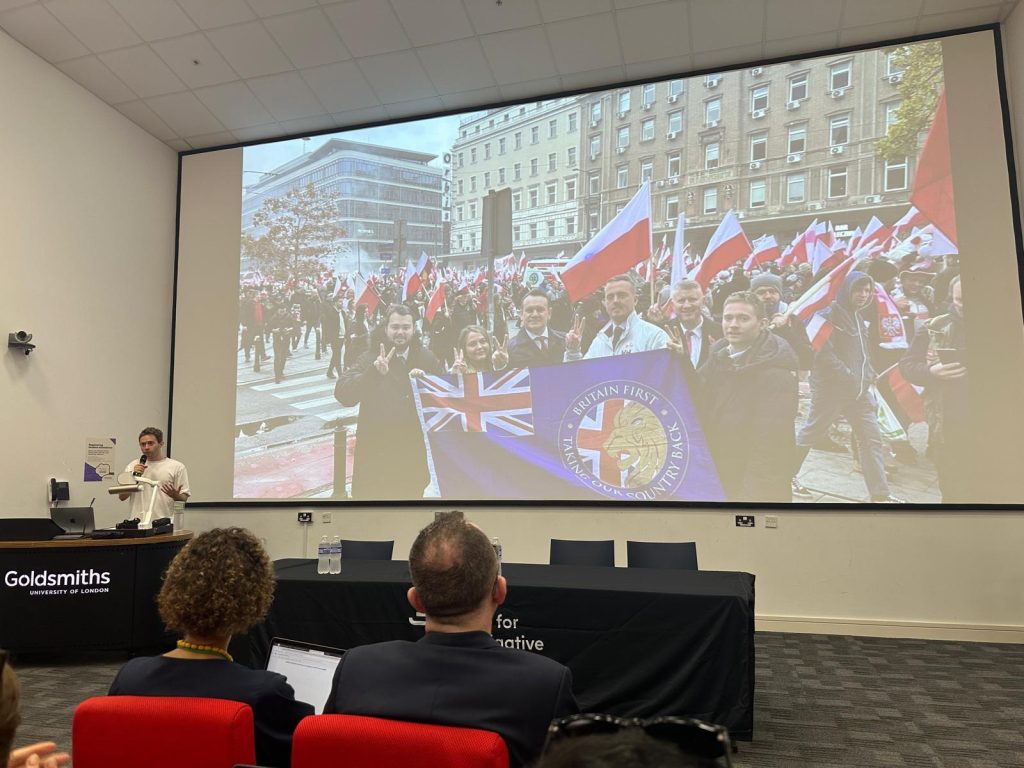
Shukman, who has written a book (The Year of the Rat) about his experiences, relayed the intense anxiety that going undercover can cause.
“I dreamed about getting found out every night,” he said, while recounting painful episodes wherein he messed up his own backstory.
Having told a far-right activist he was devoutly Christian, month later he then told the same person he was an atheist, and patched up the discrepancy by saying he was ‘questioning his faith’.
Still, he managed to discover how the Human Diversity Foundation promotes eugenicist ‘race science’ research funded by networks linked to US tech firms, revealing just how organised efforts to spread such narratives into mainstream policy are.
He also shared that while some of what he did was high stakes – he even won a prize for his far-right activism – some of his time was more mundane: a far-right conference he attended was so dull that another attendee watched football on his phone.
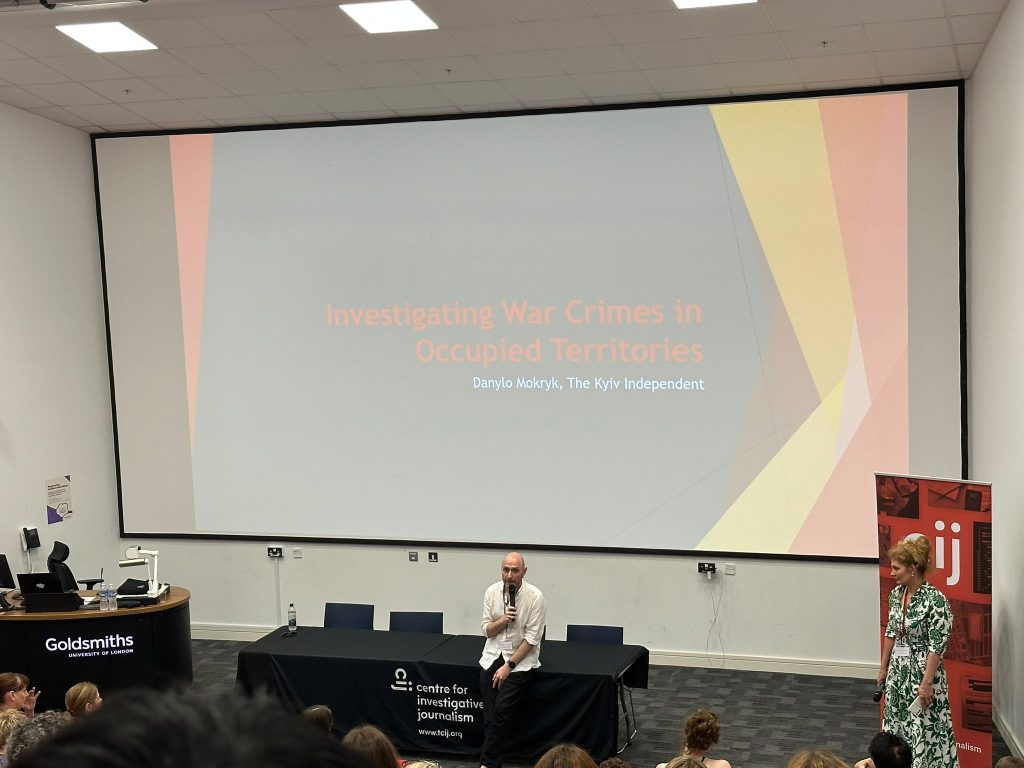
Danylo Mokryk, a reporter with the War Crimes Investigations Unit of the Kyiv Independent, discussed a different way of going undercover.
His team posed as different people depending on who they were phoning – one day they were police veterans; another, a Russian detective; another, a Russian Orthodox organisation wanting to fight against religious sects.
Mokryk’s team wanted to find evidence of Russian war crimes during the invasion.
But “identifying victims is no less important than identifying war criminals,” he said.
He stressed the importance of source safety and not promising more than could be delivered: “It’s more important to be an honest person than a successful journalist.”
Adopting Russian language and worldviews, and dropping Ukrainian idioms, took a lot of preparation, Mokryk explained, and it also took its own emotional toll, as at times they pretended to be supporting war crimes against their own people.
It’s possible to watch their methods in the film Curated Theft, a documentary about the network of people involved in stealing art in Russian-occupied Ukrainian territories.
The Kyiv Independent’s team choose video rather than text to tell their stories to engage more viewers, and Mokryk personally sees their role as journalists as being to present convincing evidence to the public, rather than considering the possible impacts in courts of law.
Jim Waterson’s talk about London Centric’s investigative reporting revealed a similar focus on creating journalism that people want to engage with.
After quipping on the bizarreness of delivering a talk while wearing shorts, he explained the importance of finding stories that are genuinely interesting to the public, rather than a deep-dive 3000-word feature that only other journalists want to read, including at times making videos about the journalists behind the scenes.
These days the public want to know who is telling the stories, says Waterson – a fact evidenced by the rise of influencer content – so he has ‘begrudgingly’ broken the fourth wall on occasion, inserting himself into the narrative.
To offer an alternative to the other modern trend of clickbait news, London Centric focuses on stories that only a reporter on the ground can find – often by door-knocking – and they only publish a handful of stories a week, delivered straight into subscribers’ inboxes: as a reader Waterson cited put it, any more becomes unreadable.
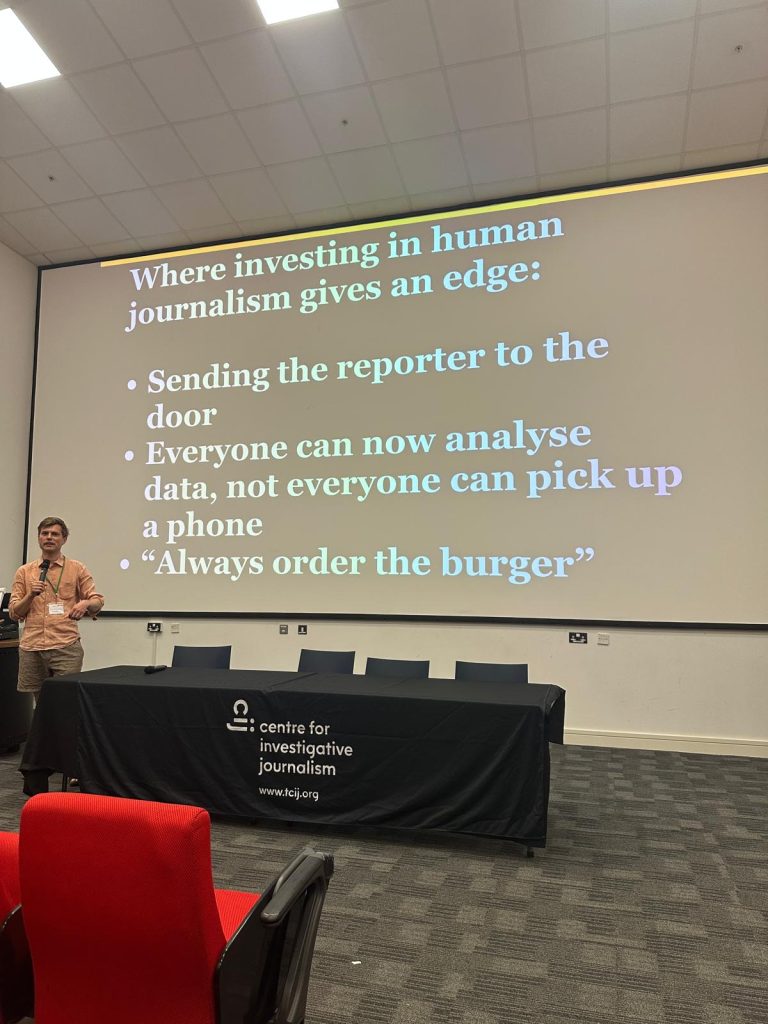
Waterson explained the importance of sticking with a story: he said that for weeks, they only covered the billionaire landlord Asif Aziz’s mass evictions in the run-up to the no-fault eviction ban, resulting in London Mayor Sadiq Khan taking up the case.
The impact of journalism was another London Centric focus – London’s tax-avoiding snail farms run by shell companies and phoenixing Harry Potter gift shops were other stories that caught the attention of the public, press and government alike.
The CIJ Summer Conference was also full of practical training sessions: Tom Sanderson had the audience utilising freshly learned Open-Source Intelligence (OSINT) tools to locate a remote Turkish lighthouse and obscure Boston street protest using reverse image tools, and Mark Lee Hunter and Luuk Sengers shared their Story-Based Inquiry Method, a manual for journalists moving from hypothesis, timeline, source map, to story.
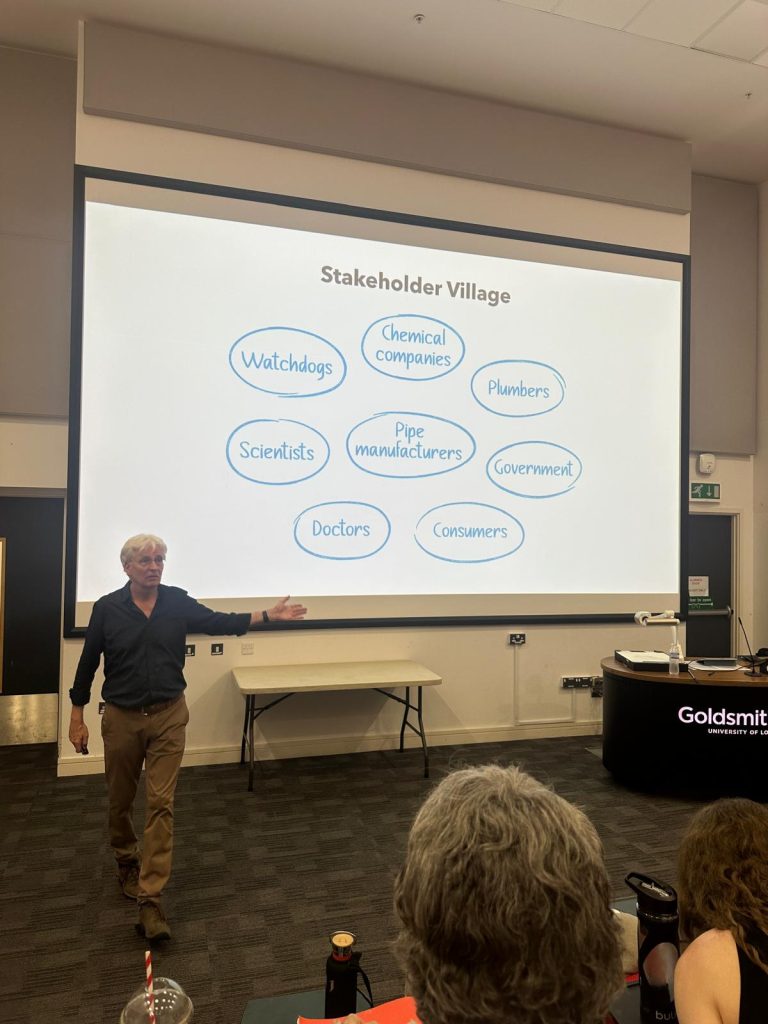
Jenna Corderoy and Lucas Amin offered a deep-dive into Freedom of Information (FoI) requests, encouraging the audience to suggest ways that FoI refusals could be effectively challenged, as well as discussing the Environmental Information Regulations – a lesser-known law used to source information on environmental matters from public authorities and oil and gas company lobbying.
As well as journalistic impact, audience engagement, AI use, and practical tools, another thread of the CIJ Summer Conference was the precarity of modern journalism.
Journalists can face legal threats, freelancer financial insecurity, harassment, and targeting. Yet the Centre for Investigative Journalism Summer Conference 2026 showed that these realities are not deterring young investigative reporters or experienced professionals from committing to their field.
Featured image credit: Stephanie Price


Join the discussion