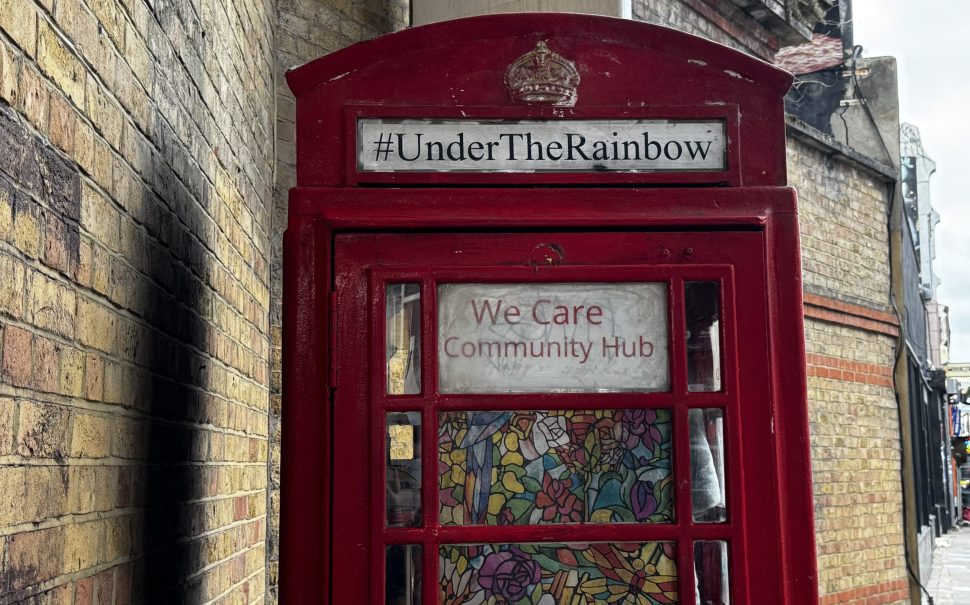
Beneath the railway bridge on Deptford High Street, a former telephone box has been transformed into a 24-hour community hub, as replicas emerge globally.
The project, named Under the Rainbow, is a nod to the colourful mural overhead and serves as a neighbourhood sanctuary where visitors can find food, toiletries, clothing and books.
It also offers information about local support services for homelessness, mental health and domestic abuse, and partnerships with local businesses have enabled the project to offer free hot drinks.
The project was founded in 2022 by long-time activist Ray Barron-Woolford, who said: “My job as a humanitarian is to ensure no one in my community starves.
“You only need one square foot to change a community.”
The philosophy is simple: leave what you can, take what you need. There are no staff, registration forms or questions about why someone might need help.
The 68-year-old approached BT after noticing the telephone box had been neglected following the restoration of the neighbouring railway station.
The company invited him to propose an alternative use.
He said: “I told them I could turn it into a 24-hour community hub that everyone could benefit from.”
“They said that was great and asked if I’d be happy to pay a pound for it. A few days later, I received the contract.”
When it opened on Valentine’s Day, which Barron-Woolford conceived as a love letter to Deptford, some predicted it would be vandalised or stripped bare.
Instead, the project now redistributes more than 4.5 tonnes of goods each year.
Its influence has spread globally, with projects inspired by the Deptford model emerging in Iceland, France, Japan, the United States and Spain, with communities adapting the idea to their own needs.
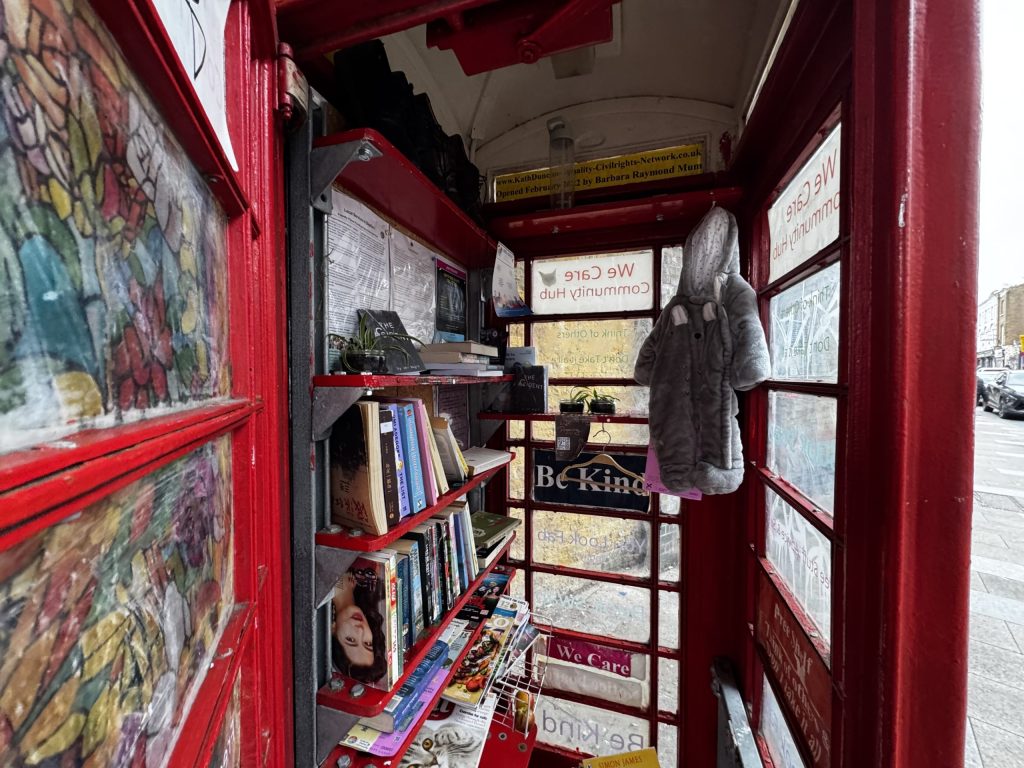
Barron-Woolford said: “People only take what they need. Someone struggling to afford everyday essentials can take a warm coat or toiletries without having to explain their circumstances.”
“Whereas someone better off might borrow a book waiting for their train or leave in a jacket that no longer fits.”
Barron-Woolford believes its success lies in preserving people’s dignity, something he says conventional charity models can overlook.
He said: “The power is that, whatever your economic status, you can use that phone box.”
“It’s completely private when you’re in there. You don’t have to disclose who you are or what support you’re accessing.”
The project has also helped people access opportunities beyond essentials.
Two Syrian women staying at a nearby refugee hotel found information in the kiosk that allowed them to learn how to ride bicycles – an activity previously prohibited to them, unlocking a new sense of independence.
This is just one of many stories about the initiative’s impact as it has become a fixture of the local community and even appeared in the opening scene of the Netflix science-fiction superhero series Supacell.
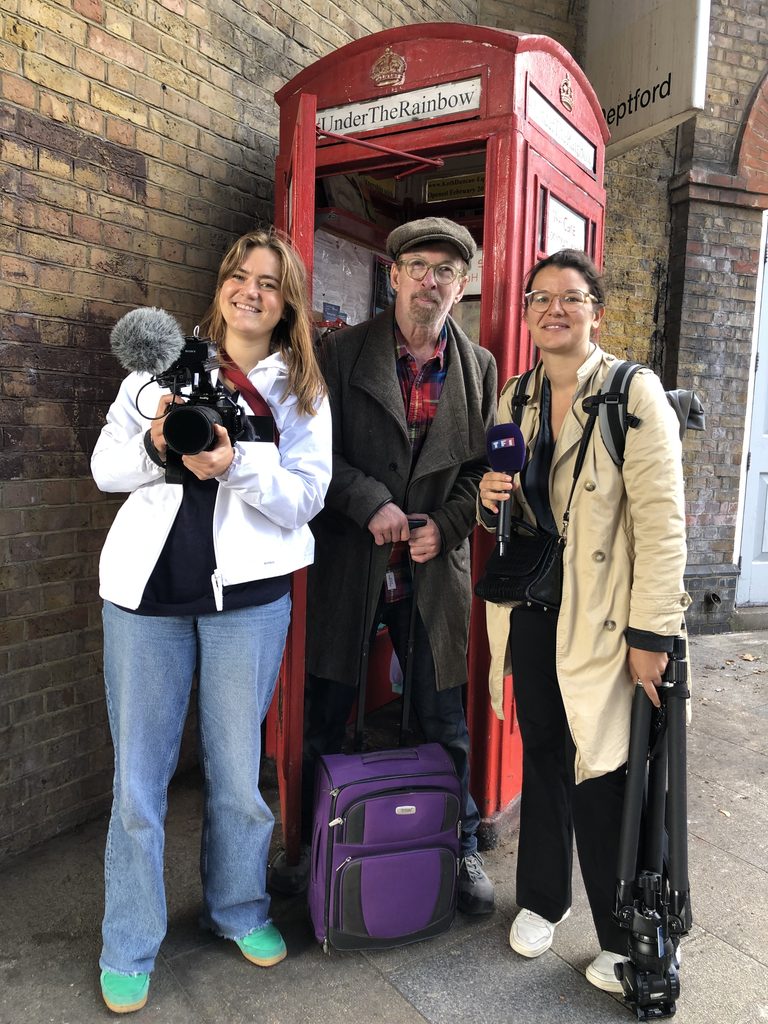
In October, French national broadcaster TF1 travelled to south-east London to film the kiosk for a report on the changing uses of Britain’s decommissioned telephone boxes.
With around 20,000 remaining in the UK, a fraction of the number in the 1990s, the programme explored how the structures, long regarded as symbols of British identity, might find a second life.
A TF1 representative said: “The story is about the second life of phone boxes, what happens to them after they have been decommissioned.”
“There have been quite a lot of libraries, so we didn’t want to focus on book swaps.”
“We thought this was visual and unusual: a phone box open all the time, easy to clean and refill.”
Barron-Woolford hopes its example will continue to inspire others.
Featured image credit: Cristin Proctor Rooney

Join the discussion